All Categories
Featured


The Financial Advantages of Sustainable Enterprise Design for 2026
Table of Contents
- – The Transition to Decentralized Research Study...
- – Advanced File Encryption and Data Segregation ...
- – Hardware Security and the Role of Secure Enclaves
- – AI-Driven Hazard Intelligence and Behavioral A...
- – Regulatory Compliance and Data Sovereignty
- – Developing a Culture of Security in Research C...
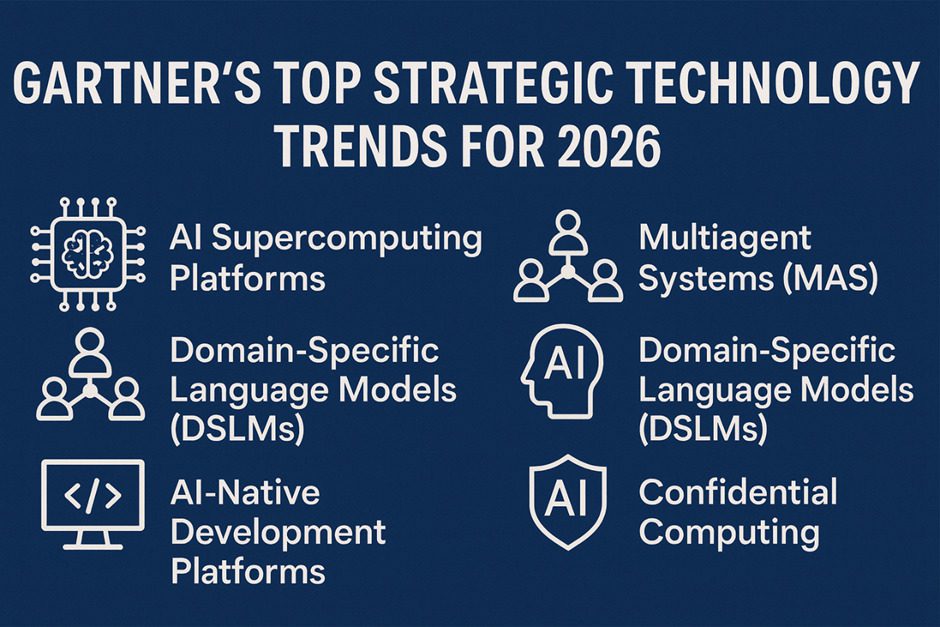

The Transition to Decentralized Research Study Environments in 2026
The centralized laboratory model has mainly faded into the past by 2026. High-performance development centers now operate as decentralized networks of specialized nodes, permitting organizations to tap into global skill pools without the restrictions of a single physical headquarters. While this shift has sped up the speed of discovery, it has actually likewise presented significant security vulnerabilities. Protecting exclusive information throughout these dispersed networks needs a shift in how engineers and security architects view the border. In 2026, the idea of a "safe" internal network no longer exists. Every connection, whether it originates from an office in a rural district or a modern satellite center, is treated with equal suspicion.
The technical architecture of these networks counts on a No Trust architecture where identity works as the main security limit. Organizations are moving away from conventional passwords in favor of continuous authentication protocols. These systems evaluate behavioral patterns, such as typing rhythm, cursor movement, and even biometric telemetry gathered from wearable gadgets, to verify that the individual accessing the R&D database is certainly who they claim to be. This level of analysis happens in the background, reducing the friction that often slows down innovative work. When these protocols recognize a variance from the recognized standard, gain access to is immediately withdrawed or limited to low-level information till additional verification is supplied.
Security teams in 2026 focus greatly on the stability of the hardware itself. Dispersed R&D means that physical control over every endpoint is difficult. To counter this, business have actually adopted silicon-based root-of-trust systems. These microchips are embedded at the manufacturing phase and supply a safe and secure structure for every single other layer of the software application stack. If the hardware is damaged or if the firmware is changed by an unauthorized party, the device ends up being incapable of decrypting the network's information. This avoids taken or compromised hardware from ending up being an entry point for corporate espionage.
Advanced File Encryption and Data Segregation Methods
The mathematics of information security has altered substantially in 2026 with the arrival of quantum-resistant algorithms. As quantum computing capabilities have actually expanded, the encryption approaches that when seemed solid are now considered high-risk. Research networks must transition to lattice-based cryptography and other post-quantum requirements to make sure that information recorded today remains safe versus the decryption abilities of tomorrow. This is particularly crucial for R&D tasks with long lifecycles, such as pharmaceutical development or aerospace engineering, where the intellectual residential or commercial property needs to stay private for decades.
Preserving high performance while making sure security is a fragile balance. One method companies accomplish this is through homomorphic file encryption. This innovation allows researchers to perform computations on encrypted data without ever needing to decrypt it. A data researcher can run an analysis on a delicate dataset while the raw details remains covert, even from the scientist. This considerably minimizes the risk of information leakages throughout the analysis phase. Executing Strategic Innovation Center Models throughout these workflows ensures that collective jobs can proceed without scientists requiring to see the full breadth of the underlying exclusive sets.
Data partition stays an essential component of these security protocols. By micro-segmenting the network, architects can separate specific research study projects from one another. A breach in a products science department does not necessarily result in a compromise in the propulsion laboratory. These sections are typically ephemeral, created throughout of a specific task and then dissolved when the work is total. This reduces the time a threat star needs to move laterally through the network if they manage to discover a point of entry. The objective is to lessen the "blast radius" of any prospective security event.
Hardware Security and the Role of Secure Enclaves
Protected enclaves have ended up being basic in 2026 for any high-level R&D task. These are separated areas within a processor that are different from the main operating system. Even if the entire computer system is jeopardized by malware, the data stored and processed within the safe enclave remains secured. Researchers utilize these enclaves to manage the most delicate aspects of their work, such as secret keys or proprietary algorithms. The seclusion is implemented at the hardware level, making it almost impossible for unauthorized software application to peek into the enclave's memory.
The reliance on Innovation Strategy within the more comprehensive innovation stack has actually grown as the requirement for specialized computing boosts. Dispersed networks typically use heterogeneous computing, blending CPUs, GPUs, and specialized AI accelerators. Each of these parts should have a verified security posture before it is permitted to join the research study network. Automated scanning tools inspect the setup and patch levels of these gadgets in real-time. If a device stops working to fulfill the necessary security standard, it is automatically quarantined from the rest of the node up until it is restored into compliance.
Physical security at remote nodes is dealt with through a combination of automated security and geo-fencing. Access to R&D information is often limited to specific geographic coordinates. If a scientist attempts to visit from an unapproved location, the system can block the request or require additional layers of authentication. In 2026, lots of organizations also utilize tamper-evident storage for their regional caches. If the physical casing of a storage unit is opened or customized, the internal drives set off an instant wipe of all cryptographic keys, rendering the information worthless.
AI-Driven Hazard Intelligence and Behavioral Analysis
Synthetic intelligence is both a tool for enemies and a main defense for R&D networks. By 2026, security operations centers rely greatly on AI to process the enormous volume of logs generated by dispersed systems. These AI models are trained to acknowledge the subtle indicators of a targeted attack, such as a sluggish and methodical exfiltration of little information packets that may go undetected by human screens. The systems look for abnormalities in data access patterns, such as a scientist unexpectedly downloading big volumes of files unassociated to their current job or visiting at uncommon hours from a brand-new device.
The human component remains a primary concern, as social engineering strategies have ended up being more advanced with making use of generative AI. Attackers can now produce highly persuading deepfake audio and video to impersonate executives or project leads. To combat this, research study networks have actually established stringent procedures for out-of-band confirmation. Any ask for sensitive information or a change in security settings must be verified through a different, pre-verified channel. Training for staff has actually likewise progressed to include simulations of these advanced AI-driven phishing attempts, keeping the team conscious of the current techniques utilized by commercial spies.
Automated red teaming is another technique acquiring traction in 2026. Security systems constantly release regulated "attacks" by themselves network to discover weaknesses before a real enemy does. This proactive technique permits groups to recognize misconfigured cloud pails, unpatched software, or weak identity controls in real-time. The outcomes of these tests are used to tweak the AI protective models, producing a feedback loop that constantly reinforces the network's strength. This ensures that the defense develops just as quickly as the risks it deals with.
Regulatory Compliance and Data Sovereignty
Browsing the complex world of data sovereignty is a significant challenge for distributed R&D. Different areas have varying laws relating to how information is dealt with, kept, and shared. By 2026, lots of countries have actually upgraded their personal privacy policies to account for innovative AI and distributed computing. Organizations should make sure that their security procedures are compliant with the laws of every jurisdiction where they have a presence. This frequently needs saving data within the borders of a particular country while still allowing scientists in other parts of the world to deal with it through safe, remote interfaces.
Modern compliance tools are integrated directly into the R&D workflow. As information is produced, it is immediately tagged with metadata that specifies its level of sensitivity and the regulations that apply to it. This metadata follows the information as it moves through the network, making sure that security policies are consistently applied. A dataset topic to strict European privacy laws will instantly be restricted from being sent out to a server in an area with weaker securities. This automatic governance lowers the risk of unintentional non-compliance, which can lead to heavy fines and damage to the company's credibility.
Openness and auditability are also critical. Dispersed networks keep immutable logs of all data gain access to and modifications, typically using dispersed ledger technology to make sure the logs can not be tampered with. These logs offer a clear trail of who accessed what information and when, which is important for both regulative audits and internal examinations. In the occasion of a presumed IP leak, these records permit the security group to trace the source of the breach with high precision, recognizing exactly which node or account was included.
Developing a Culture of Security in Research Clusters
Technology alone can not protect a dispersed R&D network. The culture of the organization need to also focus on security. In 2026, researchers are seen as partners in the security procedure rather than simply users of the system. Security procedures are created to be as unobtrusive as possible, however they require the active involvement of every employee. This consists of things like practicing excellent "digital health," being hesitant of unsolicited communications, and immediately reporting any suspicious activity. A well-informed labor force is frequently the very first line of defense versus an intrusion.
Cooperation between the security group and the R&D departments is important. Security architects require to comprehend the workflows of the scientists to build systems that support, instead of impede, their work. Regular feedback sessions allow scientists to report discomfort points where security steps are decreasing their development. The security group can then discover ways to optimize those procedures or supply alternative tools that meet the exact same security requirements. This collaborative method ensures that security is viewed as an enabler of discovery instead of a barrier to it.
As the year 2026 continues to see quick shifts in innovation, the strategies for securing dispersed research networks will keep developing. The focus will remain on structure systems that are resistant, adaptable, and capable of safeguarding the world's most valuable copyright. By integrating hardware-based trust, advanced encryption, and AI-driven monitoring, companies can keep the high-performance environments necessary for the next generation of developments while keeping their most crucial possessions safe from the ever-changing hazard of cyber-attacks.
The decentralization of innovation has actually shown to be an effective model for contemporary companies. While it brings brand-new obstacles, the ability to combine the very best minds from around the world is an effective benefit. With the best security protocols in location, these distributed networks will continue to be the engines of progress for several years to come. Maintaining the stability of these systems is not just a technical task, however a tactical necessity for any company wanting to lead in their respective field.

Table of Contents
- – The Transition to Decentralized Research Study...
- – Advanced File Encryption and Data Segregation ...
- – Hardware Security and the Role of Secure Enclaves
- – AI-Driven Hazard Intelligence and Behavioral A...
- – Regulatory Compliance and Data Sovereignty
- – Developing a Culture of Security in Research C...
Latest Posts

Modernizing Enterprise Cooling Systems for Sustainable R&D The Significance
Waste Not: Carrying Out Zero-Waste Policies in Tech Labs

Reimagining the Business Campus for a Digital-First Age
Latest Posts
Modernizing Enterprise Cooling Systems for Sustainable R&D The Significance
Waste Not: Carrying Out Zero-Waste Policies in Tech Labs
Reimagining the Business Campus for a Digital-First Age